EV Charger Installation in Riverside, CA
Connecting property owners in Riverside and Riverside County with independent, qualified electrical contractors specializing in ev charger.
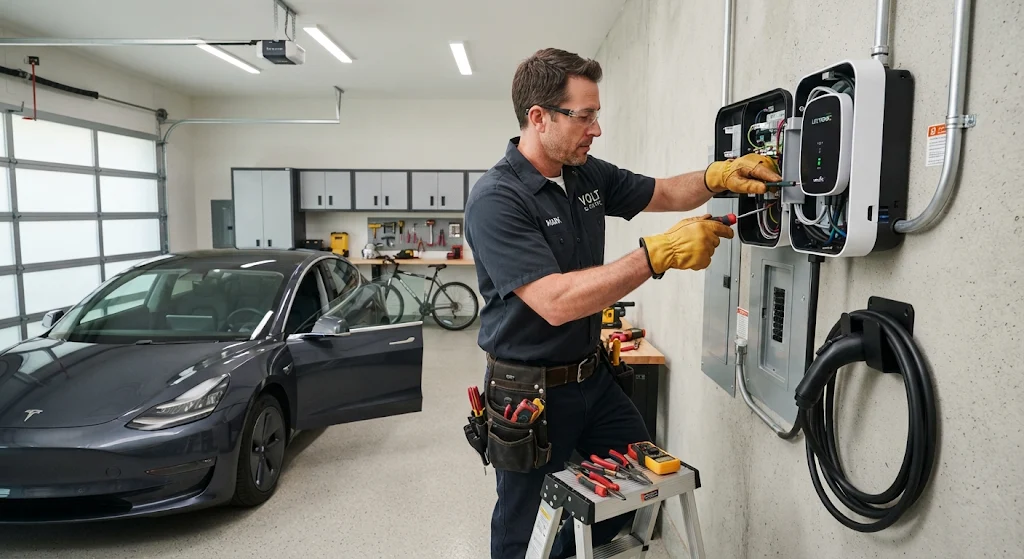
Understanding EV Charger Installation in Riverside
Dedicated Electric Vehicle (EV) Charger Installation
California is the epicentre of electric vehicle adoption, with zero-emission mandates accelerating the demand for rapid home charging. While standard Level 1 120V trickle chargers take over 24 hours for a full charge, a dedicated Level 2 240V charging station can fully charge an EV battery overnight in 4 to 8 hours.
Installing an EV charger safely requires calculating existing electrical panel loads, running appropriately sized conduit and wire (typically 6 AWG or 4 AWG copper for 48A charging), installing dedicated double-pole 240V breakers, and complying with local utility service rules. Independent electrical contractors provide complete turn-key installations for hardwired smart chargers and NEMA 14-50 receptacles.
Professional installation begins with an NEC Article 220 load calculation to ensure the home's electrical service entrance can support an additional 32A to 48A continuous electrical load without exceeding 80% breaker safety ratings. If service capacity is constrained, contractors can install intelligent dynamic load-management devices (energy monitors) that modulate charging speeds when household ovens or central air conditioners operate, avoiding costly utility panel upgrades.
Contractors route heavy-duty electrical conduit from the service panel to the preferred charging location-whether inside an attached garage, along an exterior carport, or freestanding on an outdoor pedestal. Hardwired configurations provide maximum weather resistance, eliminate nuisance tripping associated with plug-in GFCI outlets, and unlock peak 48-amp to 80-amp charging speeds for modern high-capacity EV batteries.
Local Permitting & Code Compliance in Riverside
In Riverside, executing ev charger requires careful alignment with municipal building codes enforced by the City of Riverside Community & Economic Development (Building & Safety). Depending on project scope, an electrical permit and subsequent municipal field inspection ensure that wiring methods, breaker sizes, and conduit routing conform strictly to the California Electrical Code (Title 24, Part 3).
Utility coordination through Riverside Public Utilities (RPU) is essential whenever the work impacts service entrance conductors, meter bases, or system grounding electrodes. Independent electrical contractors in Riverside manage the administrative submittals, permitting filings, and utility disconnect/reconnect workflows on behalf of property owners.
EV charger branch circuits must be sized for continuous operation at 125% of the charger's rated output (e.g., a 48A hardwired charger requires a dedicated 60A circuit breaker and appropriately rated wiring).
Essential Planning & Safety Considerations Before Beginning Work
Prior to initiating ev charger in Riverside, property owners should conduct a preliminary assessment of their existing electrical infrastructure. Verifying that the main service disconnect is readily accessible, identifying the age of existing branch wiring, and documenting any prior electrical modifications helps independent contractors evaluate project feasibility and prepare accurate estimates.
California law strictly requires that any contractor performing electrical work valued at or more in labor and materials hold an active C-10 Electrical Contractor License issued by the California Contractors State License Board (CSLB). Property owners should always verify that the independent contractor carries active commercial general liability insurance and statutory workers' compensation coverage before work commences.
Additionally, project agreements should clearly articulate the division of responsibilities regarding permit acquisition, utility service order fees, necessary drywall patching or trenching restoration, and final municipal inspection sign-offs. Clear written contracts eliminate misunderstandings and ensure your electrical installation delivers lasting safety and reliability.
Common Indicators You Need Professional Help
How WATT911 Referrals Work
We connect California residential and commercial property owners with independent local electrical contractors.
Tell Us What You Need
Submit your electrical service inquiry by phone or online. Describe your project scope, location, and timeline.
Inquiry Routing
WATT911 handles the inquiry according to its actual referral process; an appropriate participating contractor may be contacted where available.
Discuss the Project Directly
The independent contractor independently determines whether to accept the project, confirms scope, licensing, availability, pricing, and project terms.
* Note: Referral does not guarantee contractor availability, acceptance, or specific response times. Work is performed exclusively by independent contractors.
Other Approved Services in Riverside
Explore other licensed electrical specialties available through independent contractors in Riverside.
Lighting Installation
Explore Lighting Installation services in Riverside, CA.
View Lighting Installation →Generator Installation
Explore Generator Installation services in Riverside, CA.
View Generator Installation →Commercial Electrician
Explore Commercial Electrician services in Riverside, CA.
View Commercial Electrician →EV Charger FAQs
Helpful answers to common questions regarding ev charger, permitting, and contractor hiring.
Hardwired chargers connect directly into the electrical conduit and can deliver up to 48A-80A for faster charging. A NEMA 14-50 plug caps charging at 40A on a 50A circuit and requires a GFCI breaker.
An independent contractor performs an NEC load calculation. If your panel is 100A or already heavily loaded, you may need a 200A upgrade or a smart dynamic load-shedding device.
Yes. Utilities like PG&E, SCE, SDG&E, and SMUD offer specialized Time-of-Use (TOU) rate plans that drastically reduce electricity costs when charging during off-peak overnight hours.
Yes, installing a 240V dedicated circuit for an EV charger requires an electrical permit from your municipal or county building department to ensure code compliance.
Yes. Contractors can trench underground conduit from the main house panel or install a subpanel to supply continuous 240V power to detached garages or carports.