Electrical Safety Inspections in Sacramento, CA
Connecting property owners in Sacramento and Sacramento County with independent, qualified electrical contractors specializing in safety inspections.
Understanding Electrical Safety Inspections in Sacramento
Comprehensive Electrical Safety Audits & Hazard Assessments
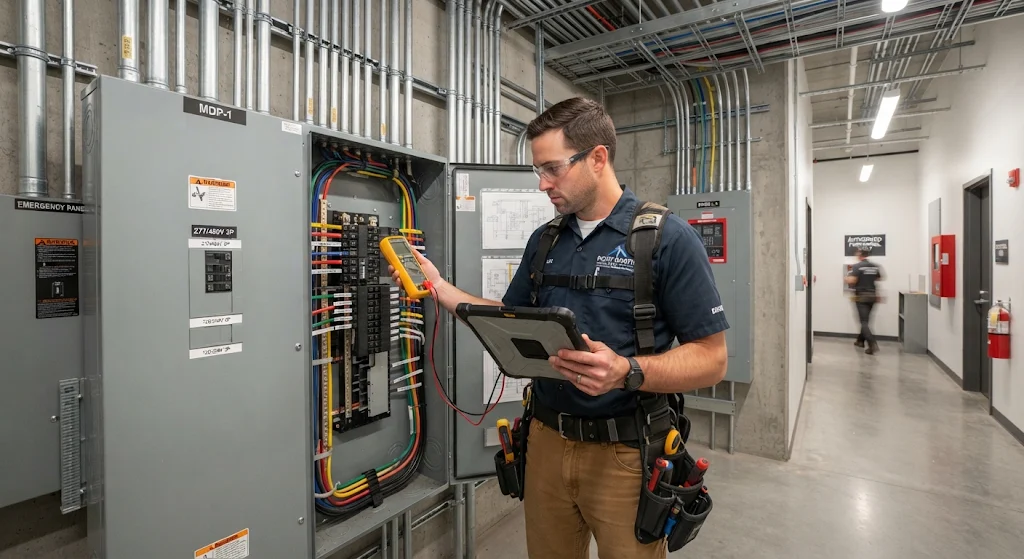
Electrical hazards are often completely invisible until a critical failure or fire occurs. Aging wiring, hidden DIY splices, loose neutral bus connections, and deteriorating breaker contacts present severe risks to property and life. A professional electrical safety inspection provides a thorough, unbiased evaluation of your entire electrical infrastructure.
Independent electrical contractors conduct rigorous point-by-point safety audits: inspecting service mast clearances, measuring grounding electrode resistance, testing GFCI/AFCI response times, checking branch circuit polarity, and utilizing infrared thermal imaging to detect abnormal heat signatures inside breaker panels. Property owners receive actionable findings prioritizing urgent safety hazards versus long-term modernization recommendations.
The safety inspection begins at the exterior service entrance, checking the utility drop, drip loops, meter enclosure, and weatherhead for physical damage or water infiltration. Inside the main electrical panel, technicians examine the condition of bus bars, check for double-tapped breakers (multiple conductors forced under a single terminal screw), confirm proper wire sizing against breaker ratings, and verify that neutral and ground conductors are appropriately bonded or isolated.
Throughout the structure, inspectors test randomly sampled wall receptacles using specialized circuit analyzers to detect open grounds, reversed hot/neutral polarity, and high ground-loop impedance. Hidden attic junction boxes, bathroom ventilation fan circuits, and major appliance hookups are surveyed to ensure compliance with modern California life-safety codes, providing property owners with a comprehensive written condition report.
Local Permitting & Code Compliance in Sacramento
In Sacramento, executing safety inspections requires careful alignment with municipal building codes enforced by the City of Sacramento Community Development Department. Depending on project scope, an electrical permit and subsequent municipal field inspection ensure that wiring methods, breaker sizes, and conduit routing conform strictly to the California Electrical Code (Title 24, Part 3).
Utility coordination through Sacramento Municipal Utility District (SMUD) is essential whenever the work impacts service entrance conductors, meter bases, or system grounding electrodes. Independent electrical contractors in Sacramento manage the administrative submittals, permitting filings, and utility disconnect/reconnect workflows on behalf of property owners.
Inspections evaluate compliance against current California Electrical Code safety benchmarks, focusing on grounding/bonding integrity, working space clearances, and required life-safety circuit protection.
Essential Planning & Safety Considerations Before Beginning Work
Prior to initiating safety inspections in Sacramento, property owners should conduct a preliminary assessment of their existing electrical infrastructure. Verifying that the main service disconnect is readily accessible, identifying the age of existing branch wiring, and documenting any prior electrical modifications helps independent contractors evaluate project feasibility and prepare accurate estimates.
California law strictly requires that any contractor performing electrical work valued at or more in labor and materials hold an active C-10 Electrical Contractor License issued by the California Contractors State License Board (CSLB). Property owners should always verify that the independent contractor carries active commercial general liability insurance and statutory workers' compensation coverage before work commences.
Additionally, project agreements should clearly articulate the division of responsibilities regarding permit acquisition, utility service order fees, necessary drywall patching or trenching restoration, and final municipal inspection sign-offs. Clear written contracts eliminate misunderstandings and ensure your electrical installation delivers lasting safety and reliability.
Common Indicators You Need Professional Help
How WATT911 Referrals Work
We connect California residential and commercial property owners with independent local electrical contractors.
Tell Us What You Need
Submit your electrical service inquiry by phone or online. Describe your project scope, location, and timeline.
Inquiry Routing
WATT911 handles the inquiry according to its actual referral process; an appropriate participating contractor may be contacted where available.
Discuss the Project Directly
The independent contractor independently determines whether to accept the project, confirms scope, licensing, availability, pricing, and project terms.
* Note: Referral does not guarantee contractor availability, acceptance, or specific response times. Work is performed exclusively by independent contractors.
Other Approved Services in Sacramento
Explore other licensed electrical specialties available through independent contractors in Sacramento.
Lighting Installation
Explore Lighting Installation services in Sacramento, CA.
View Lighting Installation →Generator Installation
Explore Generator Installation services in Sacramento, CA.
View Generator Installation →Commercial Electrician
Explore Commercial Electrician services in Sacramento, CA.
View Commercial Electrician →Safety Inspections FAQs
Helpful answers to common questions regarding safety inspections, permitting, and contractor hiring.
The inspection evaluates main service panel condition, grounding and bonding systems, branch circuit wiring type, GFCI/AFCI functionality, outlet polarity, and thermal imaging scan for hot spots.
A general home inspector performs visual spot checks. An independent licensed electrician opens panels, conducts load calculations, measures circuit resistance, and conducts in-depth technical diagnostic testing.
Providing proof of an updated 200A panel, functional AFCI breakers, and the removal of knob-and-tube or aluminum wiring often prevents policy cancellation and may qualify you for insurance discounts.
Common hazards include double-tapped circuit breakers, ungrounded receptacles, missing junction box covers, overloaded circuits, and obsolete hazardous panel brands like Zinsco and FPE.
Submit an inquiry or call WATT911. We connect you with an independent local contractor who will schedule an on-site safety audit and review findings with you.